
Learn New Skills Online
Empowering Educators, Young People & Professionals
Weekly blog
Nurturing Arabic Language Development in the Early Years: Building a Strong Foundation for Lifelong Learning
Arabic is more than a language; it is a connection to culture, identity, communication, and belonging. In the early years, children have a remarkable ability to absorb languages through meaningful interactions, play, stories, songs, and everyday experiences. Creating positive opportunities to explore Arabic from an early age can help children develop communication skills while building a lasting appreciation for the language.
Why Is Arabic Language Development Important in Early Childhood?
The early years are a valuable period for language development. During this stage, children learn to recognise sounds, understand words, communicate their needs, and gradually express their thoughts. Introducing Arabic in a warm and engaging environment allows children to become familiar with the language naturally, without making learning feel like a task.
For children growing up in multilingual communities such as the UAE, Arabic language experiences can also encourage cultural awareness and help them connect with the people and communities around them.
Every child develops at their own pace, so educators should focus on creating opportunities to listen, understand, communicate, and build confidence rather than expecting every child to progress in the same way.
Making Arabic Learning Fun and Meaningful
Children learn best when they are actively involved. Rather than relying only on worksheets or memorisation, educators can integrate Arabic into everyday nursery routines and play-based activities.
Here are a few practical approaches:
1. Storytelling and Picture Books
Use colourful Arabic storybooks, expressive voices, pictures, and repetition to introduce new vocabulary. Asking simple questions about the story encourages children to listen, respond, and participate.
2. Songs, Rhymes, and Movement
Arabic songs, nursery rhymes, and action games help children become familiar with pronunciation, rhythm, and commonly used words. Repetition makes language experiences enjoyable and memorable.
3. Arabic Through Everyday Routines
Simple greetings, counting, naming colours, and identifying familiar objects in Arabic can become part of daily classroom life. Regular exposure helps children recognise and use words in meaningful contexts.
4. Play-Based Learning
Role-play, puppets, pretend shops, matching games, and sensory activities create natural opportunities for children to hear and use Arabic while exploring their interests.
5. Family and Community Involvement
Families can support language development through conversations, songs, stories, and shared cultural experiences at home. When educators and families work together, children benefit from consistent and meaningful exposure.
The Role of Early Years Educators
Educators play an important role in making Arabic accessible, enjoyable, and inclusive. They can support children’s progress by adapting activities to different developmental stages, celebrating small achievements, and creating an environment where children feel comfortable trying new words.
Professional collaboration also matters. Sharing teaching strategies, discussing challenges, and exchanging successful classroom experiences can help educators discover new ways to strengthen Arabic language learning.
By investing in engaging resources and ongoing professional development, early years settings can make Arabic a meaningful part of children’s everyday learning journey.
Let’s Learn and Grow Together!
At Mindbot, we believe that supporting educators helps create stronger learning experiences for children. Every conversation, shared idea, and new approach can contribute to a more engaging early years environment.
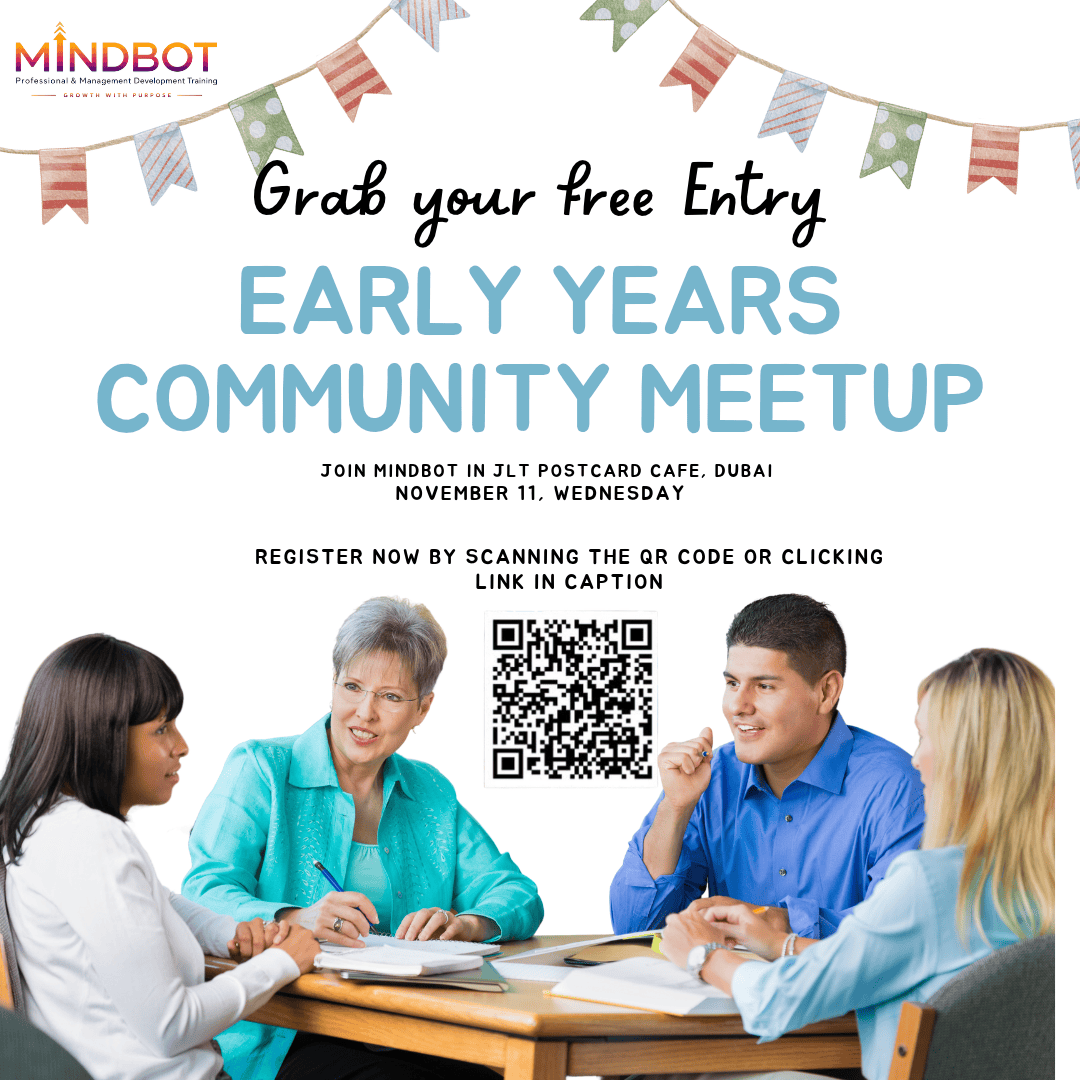
🌱 Join us at the Early Years Community Meetup!
Connect with fellow early years educators, nursery professionals, and school leaders for an evening of conversation, collaboration, and shared inspiration.
📅 Date: Wednesday, 11 November 2026
⏰ Time: 6:30 PM – 8:00 PM
📍 Venue: JLT Postcard Café, Dubai
🎟️ Entry: FREE
Register here: https://forms.gle/i2rQerPAKeeyKXts5
Let’s exchange ideas, support one another, and continue creating joyful learning experiences for every child.
Mindbot, Growth With Purpose.
Invest in Your Professional Future
From continuous professional development to globally recognised qualifications, MINDBOT supports your journey towards excellence.
OUR SERVICES
Professional Learning Solutions for Every Stage of Growth
At MINDBOT, we provide practical, evidence-based training and internationally recognised qualifications that empower educators, early years practitioners, young learners, and education professionals to grow with confidence and purpose.
Professional devolopment for educators and early years practitioners
- Professional CPD Courses
- Mental Health & Wellbeing CPD
Internationally recognised qualifications for career advancement.
- Early Years Professionals (NCFE CACHE)
- School Educators & Higher Education Practitioner Programs
Future-ready skills for students to thrive in a digital world.
Support, resilience and wellbeing for individuals and communities.
Ready to Grow With Purpose?
Take the next step in your professional journey with innovative training, expert guidance, and qualifications that make a lasting impact.